

What Ultra-Endurance Running Taught One Athlete About Saving Her Mother's Life
Share on:
About this Podcast
Lisa Tamati spent 25 years finishing races most people would not start. Death Valley. The Sahara. The Himalayas. Over 70,000 km across the world's most punishing terrain, she built a career not on talent but on a refusal to stop when every signal around her pointed to quitting. Scientists measured her VO2 max early in her career and told her she was below average and should not be doing this. She went on to crack the top ten in the world at her peak.
In this episode of the Legacy and Longevity Podcast with host Zach Dancel, Lisa explains how the lessons she accumulated across 25 years of extreme endurance racing became the exact toolkit she needed when her mother suffered a catastrophic brain aneurysm, was left misdiagnosed for six hours, and was ultimately told she would never have any quality of life again. Then, years later, when brain cancer arrived and doctors gave her weeks to live, she ran the same play again.
What this episode teaches in plain terms: the mindset that carries an athlete through 300 km of desert is not separate from the mindset that carries a caregiver through a decade of impossible odds. They are the same skill set, applied to a different kind of race.
Lesson one: You cannot control the conditions, only your response to them
Every ultra-endurance athlete learns early that race day will not go the way they planned. Weather shifts. Bodies fail. Support disappears. The athletes who finish are the ones who adapt without falling apart.
The morning Lisa's mother collapsed, the family arrived at the hospital expecting answers. What they found was a misdiagnosis. The attending physician dismissed the ambulance driver's read on the situation and left her untreated for six hours. It took a paramedic friend showing up in person and demanding a CT scan before anyone acted. The scan revealed a massive brain aneurysm. She was not expected to survive.
Lisa had no medical background. She had no framework for what was happening. What she had was 25 years of staying functional inside chaos. She did not collapse alongside her mother. She started making calls.
Lesson two: When they tell you it cannot be done, that is just the start of the race
After three weeks in intensive care, multiple surgeries, and a medically induced coma, doctors delivered a second verdict. The brain damage was too severe. The recommendation was permanent institutional care. Her mother had no speech, no spatial awareness, right-side paralysis, and no functioning vestibular system.
Lisa had heard versions of this her entire athletic life. You are below average. You should not be doing this. You cannot run across Death Valley. She had learned that those verdicts were other people's ceilings, not hers.
She refused to sign the discharge paperwork and took her mother home. She found hyperbaric oxygen therapy through the work of Dr. Paul Harch tracked down a commercial dive company willing to let her bring a severely disabled patient into their chamber, and built an eight-hour daily rehabilitation program from nothing. The social worker who processed the discharge told her she would be begging for help within two weeks.
Lesson three: Progress is not linear, and quitting during a plateau is the only real failure
Any serious endurance athlete knows the training curve does not go up in a straight line. You put in the work for months and feel like nothing is changing. Then something shifts. Then another plateau. Then another jump. The athletes who quit during the flat stretches never find out what was on the other side.
Lisa described her mother's recovery in exactly these terms. Plateau after plateau, with occasional breakthroughs that made the previous months of invisible progress suddenly visible. She rotated activities faster when neural fatigue limited focus to seconds at a time. When the body could not move, she moved it. She broke the goal into the smallest possible unit and took on each one without looking at the full distance remaining.
It took a year to get her mother standing without falling. Two and a half years to restore a driver's license, a gym routine, and five kilometers walked daily. That was round one.
Lesson four: Build your race plan even when the finish line keeps moving
When brain cancer arrived years later, half of her mother's brain was affected. Doctors gave weeks to live and said there was nothing to be done.
In ultra-endurance racing, you do not stand at the start line thinking about the full distance. You build a stage plan. You identify what resources you need for each section. You adjust as conditions change. You do not wait for certainty before you start moving.
Lisa pursued advanced genetic testing to identify which treatments were actually indicated for her mother's specific tumor profile. The options that matched fell outside standard care and required months of fighting to access. She built a protocol that included over 150 daily supplements, hyperbaric oxygen, red light therapy, pulsed electromagnetic field therapy, off-label drug combinations, ozone therapy, strict dietary changes, and peptides sourced with considerable difficulty from New Zealand.
Twelve weeks in, scans showed no active cancer. Four and a half years on, her mother is 84 and still going to the gym.
Lisa is direct about the chemotherapy decision. It was necessary to reduce tumor burden quickly, but the damage it caused left lasting side effects, including hydrocephalus and balance issues that required daily supervision. The lesson she draws is not that conventional treatment is always wrong. It is that conventional treatment is rarely enough on its own, and treating it as a complete solution rather than one stage of a larger plan is where people run into serious trouble.
Lesson five: Knowing when to recover is as important as knowing when to push
Lisa was careful to draw a line that gets lost in performance culture. The extreme races she ran for 25 years were not longevity strategies. They were athletic pursuits with real physical costs that required six months of recovery and left lasting inflammation. She watched high-performing executives stacking cold plunges, breathwork, saunas, and two-hour training sessions on top of each other, then wondering why they were gaining weight and feeling worse. Overwhelming the system generates damage, not adaptation.
For people running at full load with care giving responsibilities, high-pressure careers, and almost no recovery time built in, the more useful question is often how to bring the nervous system down rather than how to push harder. Breathwork, sleep discipline, and short recovery rituals are not luxuries. They are what keeps the machine in the race long enough to finish.
FAQ
What did ultra-endurance racing actually teach Lisa about care giving?
The ability to compartmentalize difficulty, focus on the immediate next step, adapt when conditions change, and keep going through plateaus without needing visible progress. Each of those skills transferred directly.
Is functional medicine at odds with conventional treatment?
Not in Lisa's approach. She used both during the cancer protocol, with chemotherapy to reduce tumor burden quickly and an integrative approach to address the underlying environment. The argument is not against conventional treatment but against treating it as the only tool in the plan.
How do you start taking ownership of your health without a medical background?
Lisa started with no medical training. She started by refusing a verdict, asking questions the system did not volunteer answers to, and finding practitioners who had the latitude to look deeper. The first move is deciding that your health is yours to understand, not just to hand off.
Why does the nervous system matter for recovery and performance?
Chronic stress keeps the body in a state that impairs sleep, immune function, digestion, and the ability to adapt. Bringing the nervous system down is not optional maintenance. It is what makes every other input actually land.
Listen to the full conversation on the Legacy and Longevity Podcast and subscribe for more episodes connecting health optimization, peak performance, and legacy building.
Stop accepting symptom management as the only option before exploring what personalized care, nutrition, sleep, movement, and mindset can do. Learn the health strategies traditional medicine often overlooks. Discover how, click the link below:
Follow Legacy and Longevity Podcast:
Website: LegacyandLongevity.com | Facebook: Legacy-and-Longevity-Podcast | YouTube: @LegacyandLongevityPodcast | Instagram: @LegacyandLongevity
Follow Zach Dancel:
Instagram: @ZachDancel | Facebook: Zach.Dancel | LinkedIn: @ZachDancel
Follow Lisa Tamati:
LinkedIn: @Lisa-Tamati-a7b67820/ | YouTube: @Lisa_Tamati | Website: LisaTamati.com |Twitter/X: @LisayTamati | Instagram: @LisaTamati | Facebook: LisaTamati | Linktr.ee: @LisaTamati
#LegacyAndLongevity #LisaTamati #UltraEndurance #BrainHealth #BrainCancer #FunctionalMedicine #NavaHealth #HealthAdvocacy #MindsetMatters #MentalToughness #Longevity #HyperbaricOxygen #CancerRecovery #PatientAdvocacy #TakeControlOfYourHealth #ZachDancel #HealthOptimization #PreventativeHealth #AthletesMindset #PeakPerformance #NervousSystemHealth #LongevityLifestyle #NavaCenter #PersonalDevelopment #Resilience #PushingTheLimits #HealthcareReform #BiohackingLife #WellnessJourney #BrainRecovery
Listen & Subscribe
Available on all major podcast platforms
 Spotify
 Apple
Apple
 Amazon Music
 Youtube
Recent Blogs
 Apr 14, 2026
Lindsie Vizethann spent nearly two decades in emergency medicine. She started as a CNA, became a nur...
Read More Apr 07, 2026
Michelle Hirschman has spent 25 years sitting across from people whose lives look extraordinary on t...
Read More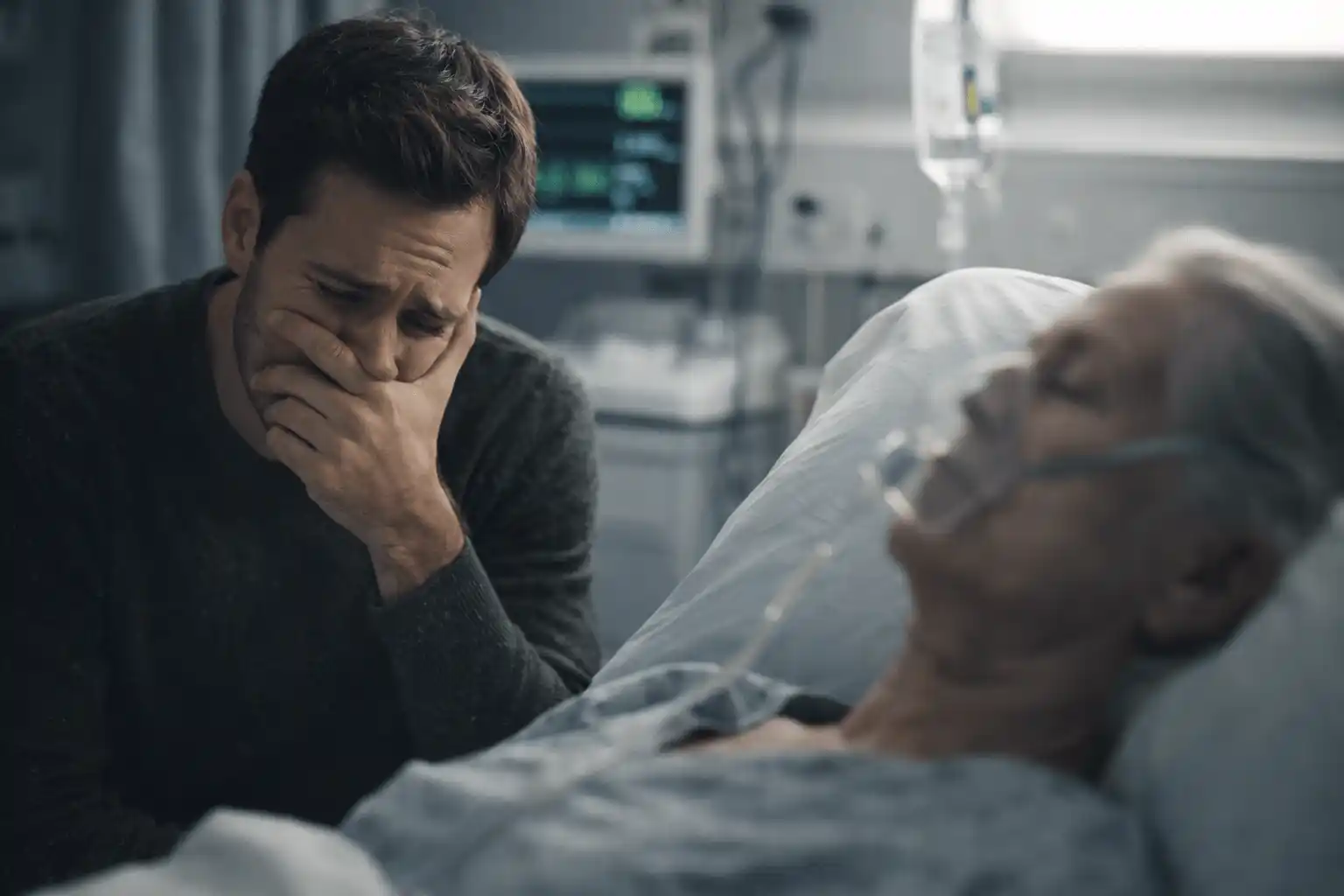 Mar 31, 2026
Anton Neugebauer has spent years inside the operating rooms of longevity and anti-aging clinics, not...
Read More Mar 24, 2026
David Lax walked into a healthcare organization that was replacing half its workforce every year. Pe...
Read More
Mar 17, 2026
Lisa Tamati spent 25 years finishing races most people would not start. Death Valley. The Sahara. Th...
Read More Mar 10, 2026
Shannon Getz fainted at work at 22 and woke up surrounded by coworkers, trying to piece together wha...
Read More Mar 03, 2026
High performers train for volatility in markets, competition, and life. Grief rarely makes that list...
Read More Feb 24, 2026
Jack Graham looked healthy at 26. He could run a fast 5K, lifted heavy, and carried the kind of phys...
Read More Feb 17, 2026
Many people live with chronic fatigue, strange symptoms, and “normal” lab work. They get passed betw...
Read More Feb 10, 2026
Lisa Franz knows burnout in her bones. Working as a police officer in New Zealand, she lived through...
Read More
Comments